Table of Contents
- Introduction
- Wheel Size vs. Tire Size
- How Wheel Diameter Affects Off-Road Performance
- Matching Wheel Size to Amarillo Terrain
- Clearance, Fitment, and Why They Matter
- What to Consider Before You Buy
- Conclusion
- Talk Through Your Setup First
- Frequently Asked Questions
Key Takeaways
- For most off-road trucks, 17- and 18-inch wheels are a strong all-around choice because they leave room for taller tire sidewalls.
- Taller sidewalls can absorb impacts, flex over rough terrain, and allow you to air down for better traction.
- Larger wheels can look aggressive, but their shorter tire sidewalls provide less cushioning and leave the wheel more exposed to impacts.
- The best wheel size depends on your truck, tire size, suspension, and the terrain you actually drive around Amarillo.
- Wheel diameter is only one part of the setup. Tire size, width, offset, backspacing, and clearance all need to work together.
Introduction
For most off-roading trucks,
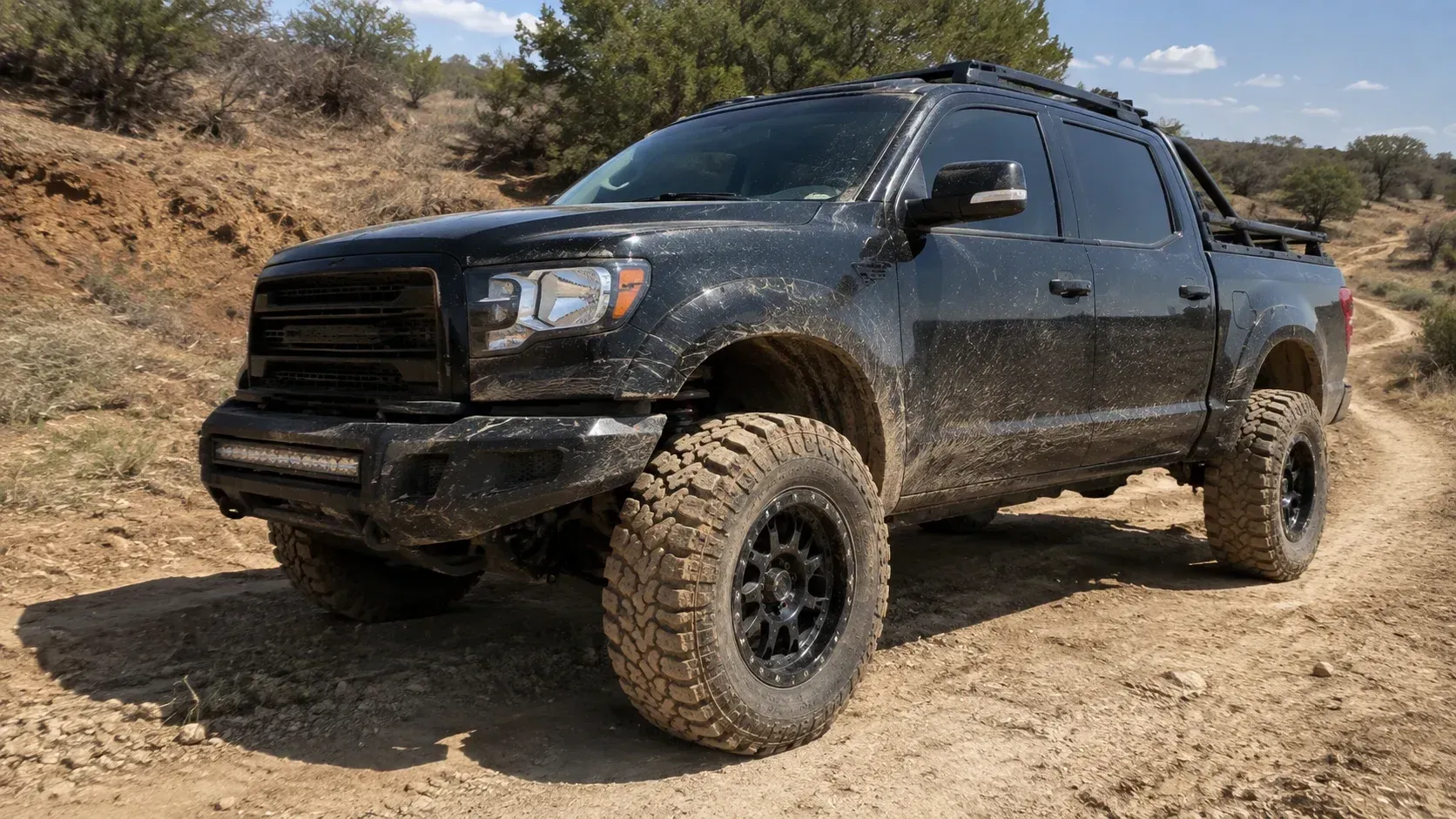
17- or 18-inch wheels are a strong all-around choice because a smaller wheel leaves room for a taller tire sidewall. That extra sidewall can absorb impacts, flex over rough ground, and allow you to lower tire pressure for better traction.
For Amarillo truck owners planning a larger build, wheel selection can also be part of a broader vehicle customization project in Amarillo, especially when larger tires require additional clearance or suspension work.
The terrain around Amarillo is varied. Caliche ranch roads, gravel, sandy areas, rocky washes, and muddy conditions after storms can all put different demands on a truck's wheels and tires.
The best setup depends less on choosing the biggest wheel available and more on matching the wheel, tire, suspension, and clearance to how you actually use your truck.
Wheel Size vs. Tire Size
Wheel size and tire size are related, but they are not the same thing.
Wheel size refers to the diameter of the wheel itself, such as 17, 18, or 20 inches. Tire size refers to the dimensions of the tire mounted around that wheel, including its overall diameter, width, and sidewall.
For a given overall tire height, a smaller wheel leaves more room for sidewall, while a larger wheel leaves less.
That sidewall matters off-road.
For example, a 35-inch tire mounted on an 18-inch wheel has a different sidewall profile than a 35-inch tire mounted on a 22-inch wheel. The overall tire height may be similar, but the amount of sidewall available to flex and absorb impacts is different.
That is why wheels and tires should be selected as a matched setup rather than choosing the wheel and tire separately.
How Wheel Diameter Affects Off-Road Performance
Ride Quality Over Rough Ground
A taller tire sidewall provides additional cushioning between the wheel and the terrain.
When you drive over rocks, ruts, roots, and uneven ground, the sidewall can flex and absorb some of the impact before it reaches the wheel and suspension.
A shorter sidewall provides less room to flex. That can result in a firmer ride, particularly when you're driving over rough terrain.
Traction on Loose Surfaces
Off-road drivers sometimes lower tire pressure, commonly called airing down, to increase the tire's contact with the ground.
A taller sidewall provides more room for the tire to flex when pressure is reduced. That can help the tire conform to uneven terrain and improve traction on loose surfaces.
The appropriate tire pressure depends on the tire, vehicle, load, and terrain. Airing down should always be done within the tire manufacturer's recommendations and with a plan for returning to appropriate road pressure before highway driving.
Wheel Protection
Rocks and other hard obstacles can be tough on wheels.
A taller sidewall places more rubber between the wheel and the terrain, providing additional protection against impacts. A low-profile tire leaves more of the wheel exposed.
That does not make a smaller wheel impossible to damage, but the additional sidewall can be an advantage when off-road conditions get rough.
On-Road Driving
Large wheels with low-profile tires can provide the aggressive appearance many truck owners want, and they can work well for trucks that spend most of their time on pavement.
If your truck regularly leaves the pavement, however, the additional sidewall provided by a smaller wheel can be more useful.
The right compromise depends on how you divide your driving between highways, city streets, ranch roads, trails, and other off-road terrain.
Matching Wheel Size to Amarillo Terrain
The terrain around Amarillo is not all the same, so think about where you actually drive before choosing your setup.
Caliche and Gravel Roads
Caliche and gravel roads can contain sharp rocks and uneven sections.
A tire with more sidewall can provide additional cushioning and help protect the wheel from impacts.
Sand
Sand creates a different challenge.
Airing down can increase the tire's footprint and help the truck maintain traction instead of digging into loose ground. A setup with sufficient sidewall gives the tire more flexibility when running lower pressure.
Rocky Trails and Washes
Rocky terrain increases the possibility of impacts and pinch points.
Additional sidewall can provide more protection between the obstacle and wheel, making a 17- or 18-inch wheel an appealing option for trucks that regularly encounter this type of terrain.
Mud
After a Panhandle storm, muddy conditions can change the demands on your truck.
Tread design plays a major role in mud performance, but tire size, pressure, clearance, and the overall wheel and tire combination still matter.
For a truck that sees a mix of these conditions, a
17- or 18-inch wheel paired with an appropriately sized all-terrain or mud-terrain tire can provide a practical balance between off-road capability and everyday drivability.
Clearance, Fitment, and Why They Matter
Choosing the right wheel diameter is only part of building an off-road setup.
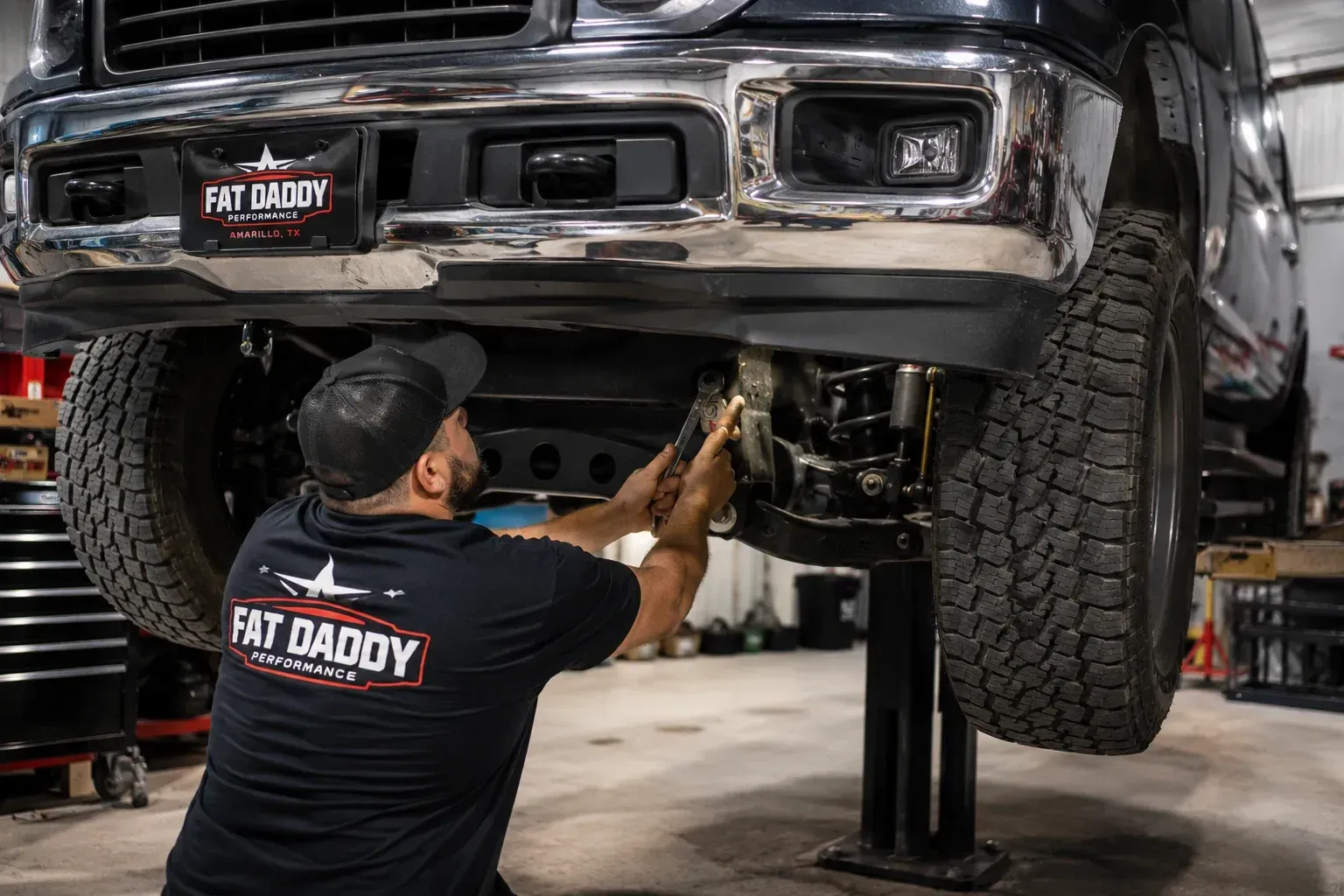
Larger tires need enough room to move without rubbing the fender, control arms, frame, or other components when the steering is turned or the suspension compresses.
This is where suspension and clearance modifications can become part of the project. A leveling kit or lift may provide additional clearance for a larger tire setup, depending on the truck and the amount of lift required.
Wheel offset and backspacing also affect fitment.
These measurements determine where the wheel sits relative to the suspension and fender. The wrong combination can cause rubbing or position the wheel farther outside the fender than intended.
Your truck's specific year, make, model, tire size, wheel width, and suspension setup should all be considered before buying.
Suspension Matters Too
Larger wheels and tires can change the weight and geometry of the setup.
The additional weight of larger tires can affect how the truck rides and handles. Suspension components also need to work appropriately with the new setup.
When a wheel and tire upgrade is part of a larger build, suspension services can be considered alongside the wheel, tire, and clearance requirements.
Speedometer and Drivetrain Considerations
Changing the overall diameter of your tires can affect the speedometer because a taller tire travels farther with each rotation.
Larger and heavier tires can also place additional demands on components such as the brakes and drivetrain.
These aren't necessarily reasons to avoid a larger tire setup. They are simply factors worth considering before making the change.
What to Consider Before You Buy
Before buying wheels and tires for an off-road truck, answer a few basic questions.
How Do You Split Your Driving?
If your truck spends most of its time on the highway and only occasionally sees a trail, you may want a different setup than someone who spends every weekend off-road.
Be realistic about how you use the truck.
What Tire Size Are You Targeting?
Start with the tire rather than choosing the wheel first.
Once you know the overall tire height and width you want, you can determine which wheel diameter provides the sidewall and fitment you need.
Does Your Truck Need More Clearance?
Larger tires may require a leveling kit, lift, or other modifications to prevent rubbing.
Factor those costs into the entire project rather than budgeting only for the wheels and tires.
What Is Your Budget for the Complete Setup?
The wheels are only one part of the cost.
Your total budget may need to account for tires, suspension or clearance modifications, installation, and any additional adjustments required for proper fitment.
Looking at the price of the wheels alone can lead to surprises later.
Where Will You Drive?
Think about the actual terrain you encounter.
A truck used mostly on pavement with occasional gravel roads has different needs from one regularly driven through sand, rocks, mud, and uneven trails.
Conclusion
For most off-roading trucks in Amarillo,
17- and 18-inch wheels are strong all-around choices because they leave room for taller tire sidewalls. That additional sidewall can improve impact absorption, provide more flexibility when airing down, and offer greater protection for the wheel on rough terrain.
Larger wheels can still make sense for trucks that prioritize appearance and highway driving, but their shorter tire sidewalls provide less cushioning for serious off-road use.
Ultimately, the best wheel size depends on your truck, target tire size, suspension, clearance, budget, and the terrain you actually drive.
The wheel should be chosen as part of the complete setup, not as an isolated upgrade.
Talk Through Your Setup First
If you're planning an off-road truck upgrade, getting the wheel, tire, and suspension combination right before buying anything can help you avoid expensive fitment problems.
FatDaddy Performance can help Amarillo truck owners consider wheel size, tire fitment, clearance, and the overall setup based on how the truck will be used.
Call
(806) 513-2020 or email
sales@fatdaddyperformance.com to discuss your setup.
Request an Off-Road Upgrade Quote