Introduction
Modifying a truck exhaust system is often legal in Texas, but removing emissions equipment is not, and a setup that is too loud can be cited even when every emissions part is still in place. Anyone planning changes to a
truck exhaust system should treat the question as two separate ones: does the setup keep the required emissions parts, and does it keep the truck's noise at a reasonable level.
This matters to San Antonio drivers because the cheapest parts are often the riskiest. A homeowner who wants a deeper sound, or a business owner who wants better flow on a diesel work truck, can end up with a failed inspection, a citation, or a federal tampering problem if the wrong parts go on. The exhaust modification itself is rarely the issue. What gets removed, and how loud the result is, usually decides the outcome.
This guide explains how emissions and noise rules apply, which changes tend to carry less risk, and how to plan an exhaust change without creating trouble later. It is general information, not legal advice, so confirm current rules with an official source before you buy parts.
The Short Answer: Modifying Is Often Legal, Removing Parts Often Is Not
Direct Answer
Changing the muffler, piping, and tips on a truck is often legal in Texas as long as the vehicle keeps a working muffler, keeps its emissions equipment, and is not excessively loud. Removing or disabling the catalytic converter or other emissions parts is prohibited under federal law, and that applies in Texas like everywhere else.
Why Two Different Rules Apply
Emissions and noise are regulated separately. Emissions rules focus on what the exhaust contains, so they target parts like the catalytic converter and, on diesels, the particulate filter. Noise rules focus on how loud the truck is, so they target mufflers, cutouts, and similar parts. A truck can pass one and fail the other.
What "Legal" Really Means Here
A part being sold online does not make it legal for street use. Many exhaust components are labeled "for off-road use only," which signals they are not intended for a truck driven on public roads.
Emissions Rules: Where Removal Becomes a Problem
The Catalytic Converter
Federal law prohibits removing or disabling a vehicle's emissions control equipment, and the catalytic converter is a core part of that equipment. Replacing a failed converter with a compliant aftermarket unit is a different matter, and it is generally acceptable when the replacement meets the applicable requirements.
Diesel Particulate Filters and Related Parts
Diesel trucks add components such as particulate filters and exhaust gas recirculation systems. Deleting these parts is a federal violation, and the EPA has pursued enforcement against both sellers and installers of delete kits. A tune that disables these systems falls under the same concern.
Inspection and Registration
Texas has changed how vehicle inspections work in recent years, and requirements can depend on the county and the type of vehicle. Commercial and fleet vehicles may face different expectations than personal trucks. Confirm the current rules with the Texas Department of Public Safety or your county tax office, since they change more often than most owners expect.
Noise Rules: How Loud Is Too Loud
The Muffler Requirement
Texas law generally requires a muffler in good working order and addresses excessive or unusual noise. Straight pipes, which remove the muffler entirely, and muffler cutouts are the changes most likely to conflict with that requirement.
Why There Is No Simple Decibel Answer
Drivers often ask for a legal decibel number. Texas relies largely on the general muffler and excessive-noise language rather than one simple figure for every truck, which leaves room for interpretation by officers and courts. The result is that a truck with a muffler can still draw attention if it is loud enough, and a quieter truck with a muffler is much easier to defend.
Local Rules and Neighborhoods
Cities can adopt their own noise ordinances, and San Antonio drivers should check the current city rules rather than assume the state rule is the only one. Homeowner associations may also restrict vehicle noise, and a business owner who starts a work truck early near homes can create complaints even when the truck is technically compliant. Pairing a quieter muffler choice with good
exhaust warning signs awareness, such as leaks and rattles, helps keep the system quiet as it ages.
Which Exhaust Modifications Tend to Be Lower Risk
Cat-Back Systems
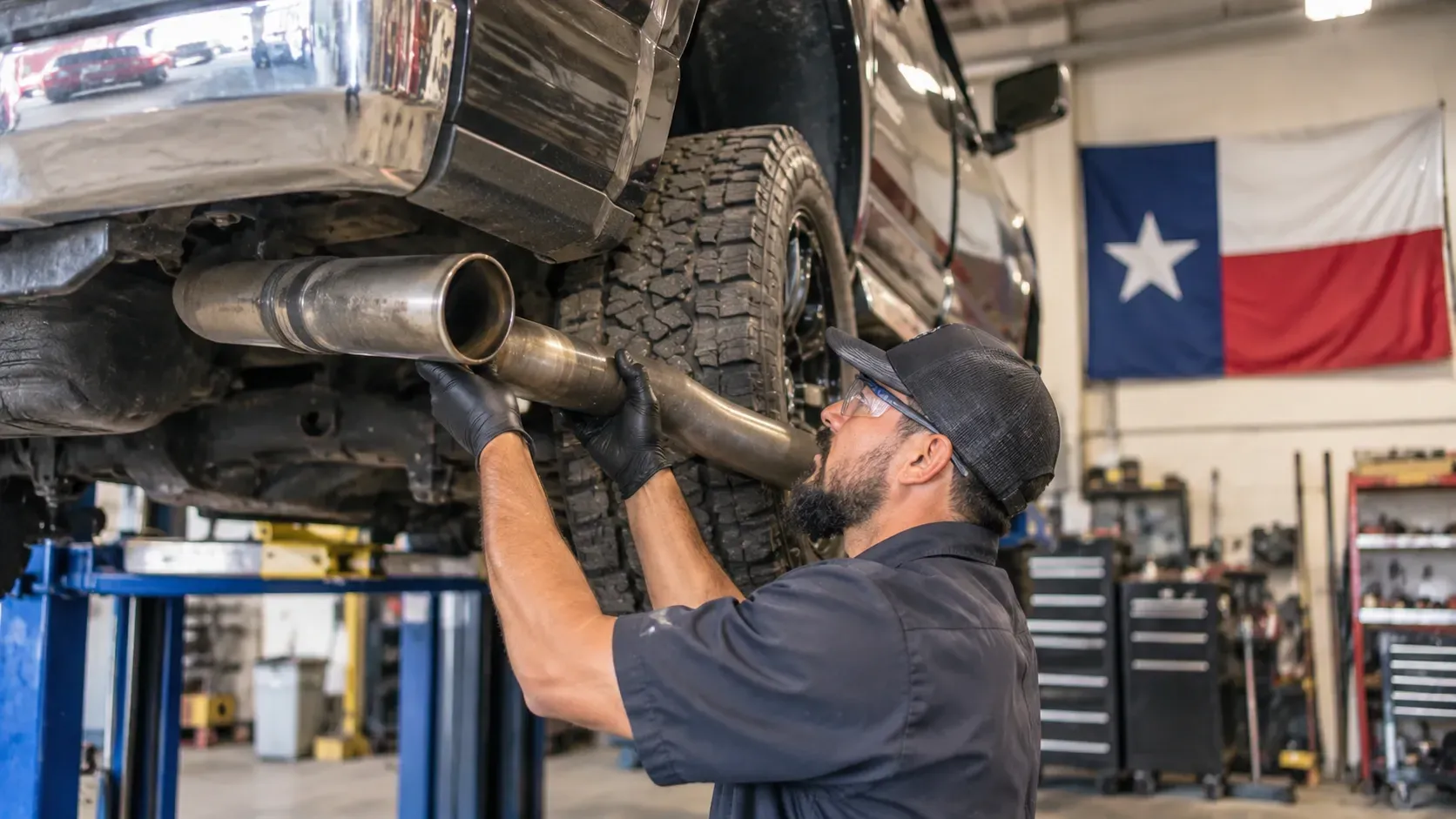
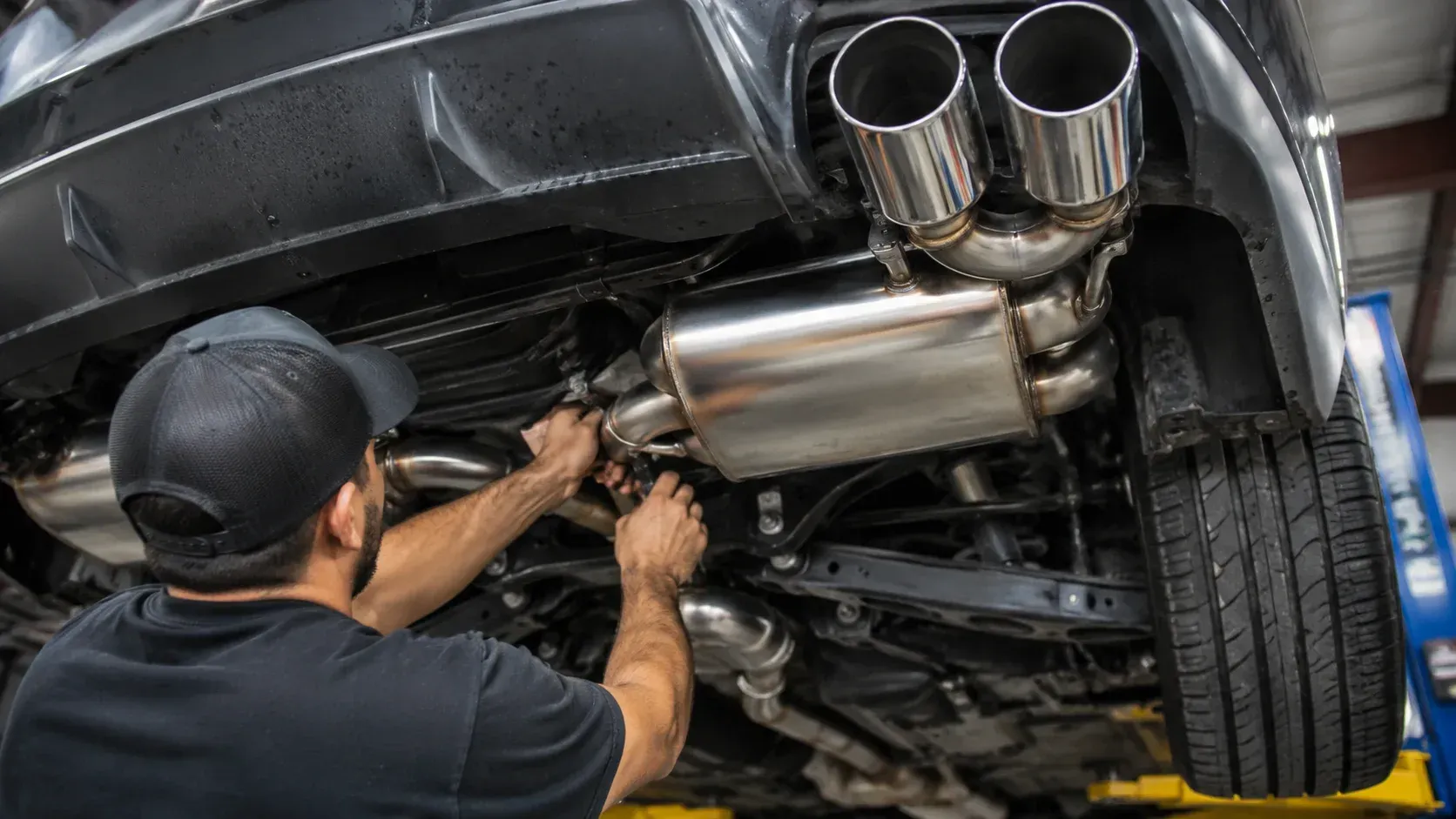
A cat-back system replaces the piping, muffler, and tips behind the catalytic converter and leaves the emissions equipment alone. It is the most common choice for owners who want a different sound and some flow improvement, and it generally carries the least legal risk when the muffler stays.
Muffler and Tip Swaps
Changing the muffler or tips alone is a smaller job. The risk comes from choosing a muffler so open that the truck becomes loud enough to draw a citation.
Axle-Back and Resonator Changes
These changes alter the sound near the rear of the truck and keep the emissions parts intact. A resonator delete can raise the noise level more than owners expect, so the sound is worth considering before committing.
Changes That Carry Higher Risk
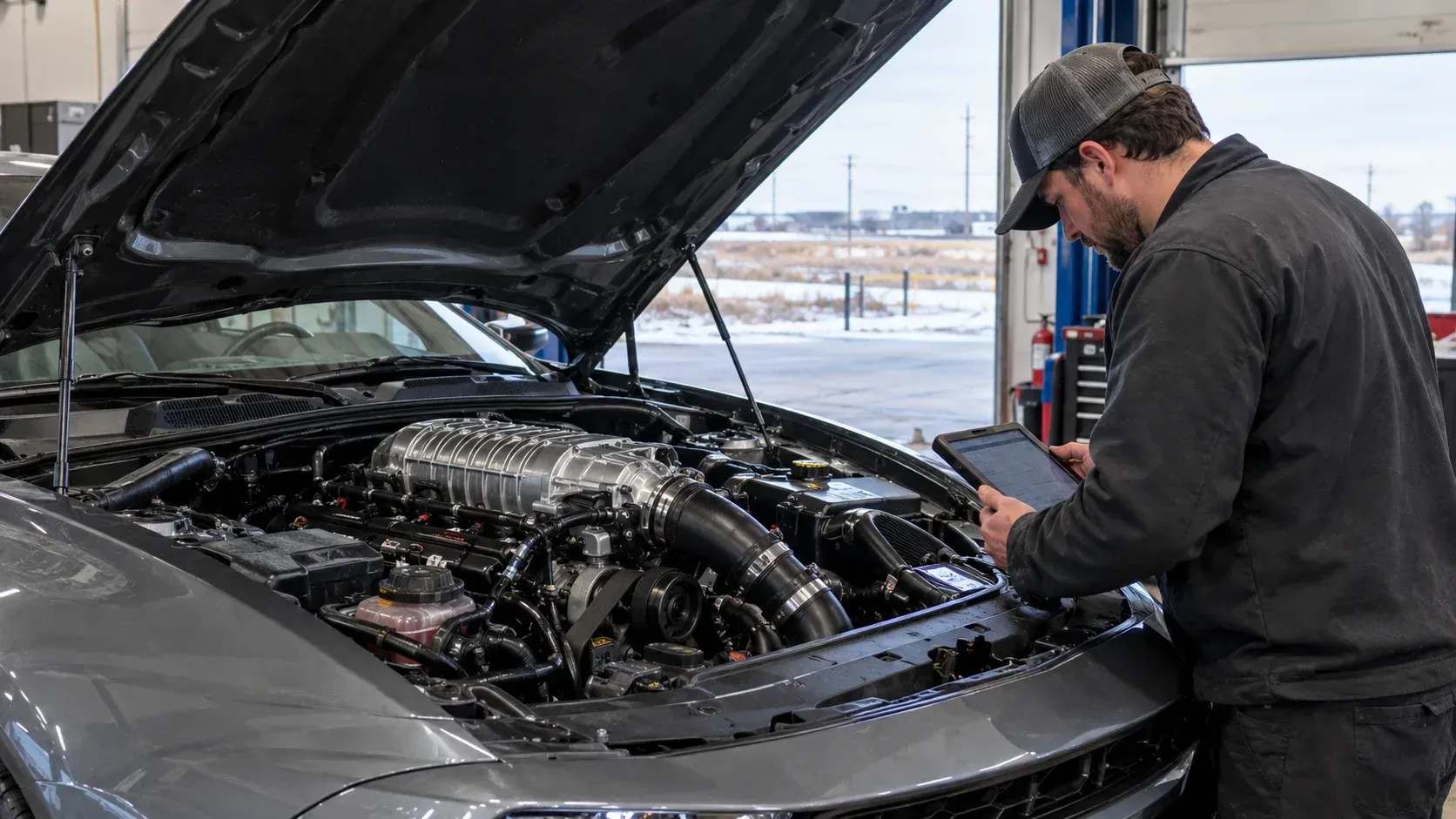
Removing the catalytic converter, installing straight pipes, fitting cutouts, and deleting diesel emissions parts carry the highest legal and financial exposure. Some changes also benefit from
engine programming to keep fuel and timing correct, and a tune that disables emissions systems is a separate problem from one that simply adjusts them.
Common Misunderstandings About Exhaust Laws
Common Belief: If a Part Is for Sale, It Is Legal to Use
What is actually true: Many exhaust parts are marked for off-road or competition use only. Selling a part is not the same as approving it for a street-driven truck.
Why it matters: Installing a part that is not street legal can create a violation that follows the owner, not the seller.
Common Belief: Only a Loud Exhaust Gets Cited
What is actually true: A quiet truck with a removed catalytic converter can still be in violation of federal emissions rules, and it may fail an emissions inspection where one applies.
Why it matters: Sound and emissions are separate, and passing one does not cover the other.
Common Belief: A Delete Is Fine if the Truck Is Only Used for Work
What is actually true: Federal emissions rules apply to the vehicle, not to how it is used. A work truck with deleted emissions parts is still modified in violation of those rules.
Why it matters: Business owners can face added exposure because a fleet vehicle is more visible and more likely to be inspected.
A Realistic Scenario in San Antonio
Consider a hypothetical example. A San Antonio homeowner buys an inexpensive exhaust kit online for a half-ton truck and removes the catalytic converter along with the muffler for a louder sound.
The truck now draws complaints from neighbors, and a later inspection question reveals the missing catalytic converter. The owner pays to replace the removed parts and the loud setup, which ends up costing more than a compliant cat-back would have cost at the start.
None of this involves a rare circumstance. It shows how a cheap shortcut can turn into a larger bill, and it is an illustration of a common pattern, not a prediction of how an officer or inspector would respond to any particular truck.
How to Plan an Exhaust Change Responsibly
A simple sequence keeps the decision grounded.
- Define the goal. Sound, flow, durability, and appearance lead to different setups.
- Keep the emissions equipment. Plan the work around the catalytic converter and, on diesels, the particulate filter.
- Keep a real muffler. Choose one that suits the truck and the neighborhood where it is parked.
- Check local expectations. Review San Antonio noise rules and any homeowner association restrictions.
- Confirm inspection requirements. Ask DPS or your county tax office what applies to your vehicle.
- Document the parts. Keep receipts and part numbers that show the components are intended for street use.
What Typical Online Advice Overlooks
Most online answers pick one side and stop, either saying exhaust changes are fine or saying they are illegal. The accurate answer is that the legal outcome depends on which parts change and how the truck sounds afterward, which is why a blanket statement is rarely useful.
Online advice also tends to ignore enforcement in practice. A truck with a compliant setup rarely draws attention, while one with obvious tampering or an excessive noise level is far more likely to. The long-term cost is often overlooked too, since removing parts that must later be replaced can exceed what a compliant setup would have cost.
Finally, many articles skip the difference between personal and business use. A work truck on a fleet or a job site faces more visibility, so the margin for a questionable setup is smaller.
Conclusion
Modifying a truck exhaust is often legal in Texas, but removing emissions equipment is not, and a setup that is too loud can be cited even when the emissions parts are intact. Cat-back systems that keep the catalytic converter and a working muffler generally carry the least risk, while converter removal, straight pipes, cutouts, and diesel deletes carry the most.
The most useful approach is to decide what you want from the change, keep the emissions equipment, choose a muffler that fits your neighborhood, and confirm current rules with an official source before buying parts. Understanding which rule each part touches is what keeps an exhaust upgrade from turning into a bigger problem.
Questions About Your Truck Exhaust System in San Antonio? Ask First
If you are weighing an exhaust change and want to talk through options, a short conversation can clarify which parts are likely to cause problems. Fatdaddy Performance is based in Amarillo and works on exhaust systems, and the team is glad to answer questions from drivers in other parts of Texas.
Ask the team about your setup or call (806) 513-2020. No pressure, just clear information.